
Benin’s Abortive Coup and the Commander Who Led It
Author & Investigator: Rabia Ansari
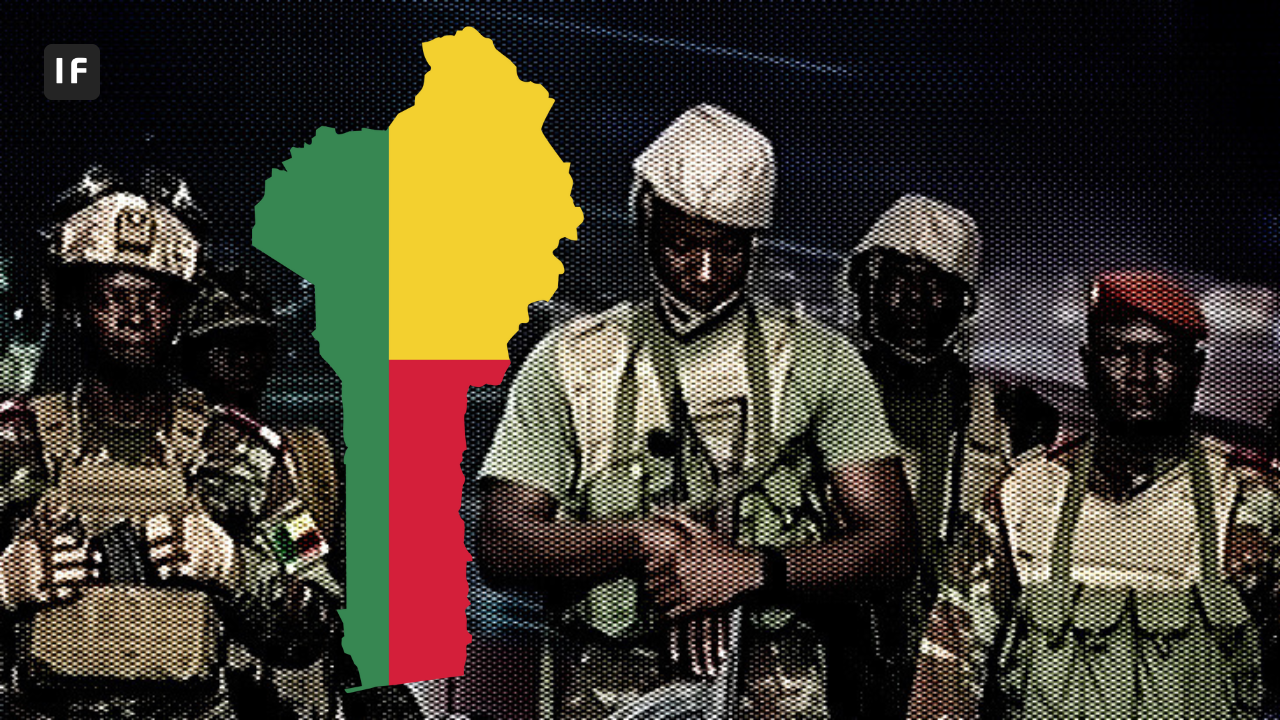
On 7 December 2025, a group of armed soldiers in Benin briefly seized the national broadcaster in Cotonou, announced that President Patrice Talon had been removed, and declared the creation of a “Military Committee for Refoundation” within hours, the government said loyal forces had foiled the coup and restored control, calling it a mutiny by a small faction rather than a full-scale takeover. The mutineers sought to present themselves as a legitimate governing authority under the name Military Committee for Refoundation. Al Jazeera reported that the soldiers attempted to close Benin’s borders and airspace in an effort to project total state capture, despite controlling only a single broadcast building.
The attempt collapsed within hours. As AP News noted, Interior Minister Alassane Seidou confirmed that loyalist forces had restored order, emphasising that the military hierarchy remained broadly intact and that the mutiny was limited in scope.
The commander behind the attempted coup
The soldiers who appeared on television identified Lieutenant Colonel Pascal Éloge Tigri as the leader of the operation. It has been confirmed that Tigri was introduced as the president of the Military Committee for Refoundation, positioning him as the central strategist of the attempted takeover. From publicly available records, Tigri appears to have been an active field officer with genuine responsibilities, not someone with a purely nominal rank.
An official 2010 presidential decree on promotions lists Lieutenant Tigri Pascal Euloge among officers elevated to the rank of captain in the army, effective 1 October 2011, confirming his early career progression within the regular forces. A later 2017 decree on military posts names him as part of the land forces cadre, showing that by the late 2010s he remained a serving field officer rather than a marginal or retired figure. Taken together, these official records underline that the coup was fronted by a long-serving, institutionally embedded officer, not an outsider, which strengthens the argument that parts of the professional core of the army have become alienated from the civilian leadership. His decision to front a coup indicates a deeper breach of trust between segments of the armed forces and the political executive.
Currently, according to local news and international reporting, Tigri fled across the border into neighbouring Togo, where he is believed to be seeking refuge, and remains at large as Cotonou presses for his extradition.
What led to the coup attempt?
In their televised justification, the plotters blamed the government for “neglect of fallen brothers in arms” and the deteriorating security situation in the north. One account described how the mutineers justified their actions as a defence of soldiers’ honour. These grievances gain traction amid intensifying violence from Sahelian jihadist groups. These grievances resonate in a context where violence from Sahelian jihadist groups has intensified.
It has been reported that a single April 2025 attack in Alibori killed 54 Beninese soldiers, the deadliest incident since insurgent activity crossed into Benin. The attack was claimed by Jama'at Nusrat al-Islam wal-Muslimin (JNIM), an al-Qaeda affiliate that has led the jihadist insurgency in northern Benin since 2021. By invoking these losses, the plotters tapped into a now regionally familiar narrative, one in which coups are justified as corrective actions after government failures in security management.
Al Jazeera noted that this rhetoric echoes the framing used by juntas in Mali, Burkina Faso, and Niger. Domestic political developments added further strain, the coup attempt occurred shortly after parliament passed constitutional reforms extending presidential and legislative terms from five to seven years. It has been reported that these changes, along with the creation of a new Senate, were widely interpreted as consolidating executive power.
Analysis by World Politics Review argues that these reforms, combined with earlier disqualifications and prosecutions of opposition figures, have narrowed peaceful avenues for political competition.
For officers already strained by security conditions, the perception that civilian politics has become increasingly exclusionary may have lowered the threshold for turning grievances into action. Early coverage suggested that the Benin attempt closely mirrored tactics used by recent Sahelian juntas, including the seizure of state media and the formation of military committees.
These recurring patterns point to a growing demonstration effect within the region’s officer corps. Reports say that the top command remained loyal, preventing the coup from escalating.
However, it should be noted that the participation of a decorated lieutenant colonel underscores unresolved fractures within the army.
Looking ahead, the government now faces a strategic choice: respond through punitive purges alone, or combine accountability with reforms addressing operational grievances in the north and political pressures at home. Without a substantive response, the structural drivers behind the coup attempt are likely to remain in place.
