Hacking is often framed as a threat. In public debate, it appears as a breach, an intrusion, a crime. But, as Baptiste Robert argues, hacking at its core is about understanding systems, how they work, how they fail, and where power hides.
In a recent episode of Intelligence Spotlight, Robert, the founder of Predicta Lab, reflected on his journey from early experimentation to building tools used by analysts, journalists, and public institutions. “When I started ten years ago, my goal was only to have fun,” he said. “I wanted to see how my phone was working, how developers created their apps.” That curiosity soon came with consequences.
“There is a very special feeling when you find vulnerabilities,” he explained. “You know you have something in your hand that you shouldn’t have. And that excitement comes with a lot of responsibility.” For Robert, intention matters. Discovering a flaw is one thing. Exploiting it is another.
This ethical tension sits at the heart of his work today. Predicta Lab began as an effort to tackle disinformation, after Robert observed how state institutions struggled with inconsistent tools and poor access to data. “They asked three different startups the same question and got three different results,” he recalled. “The methodology was different, the tools were not good.”
What followed was a shift towards open-source intelligence and scale. “Everyone can do OSINT manually,” Robert said. “What we bring is the ability to do it at scale.” Automation, AI, and collaborative tools, such as Predicta Graph, are designed to save time and allow analysts to focus on judgement rather than extraction.
Yet power brings risk. Robert is clear that tools can be misused. “My responsibility is to limit the abuse of my tools,” he said, pointing to internal audits, legal constraints, and an ethical committee. “At the end, you know when it’s good and you know when it’s bad.”
For beginners, his warning is blunt. “People don’t understand the difference between information and intelligence,” he said. Raw data is not actionable. Intelligence is information you can base a decision on. “OSINT is not data extraction. Learn how to analyse. Learn how to write reports.”
Looking ahead, Robert does not frame the future as one of cyber soldiers alone. Instead, he calls for collaboration. “We need more cyber experts,” he said, “and more cooperation between the private sector and the public sector.” In a world that is neither transparent nor peaceful, ethical hacking, done with restraint, may be one of the few ways power can still be questioned.
More episodes
View all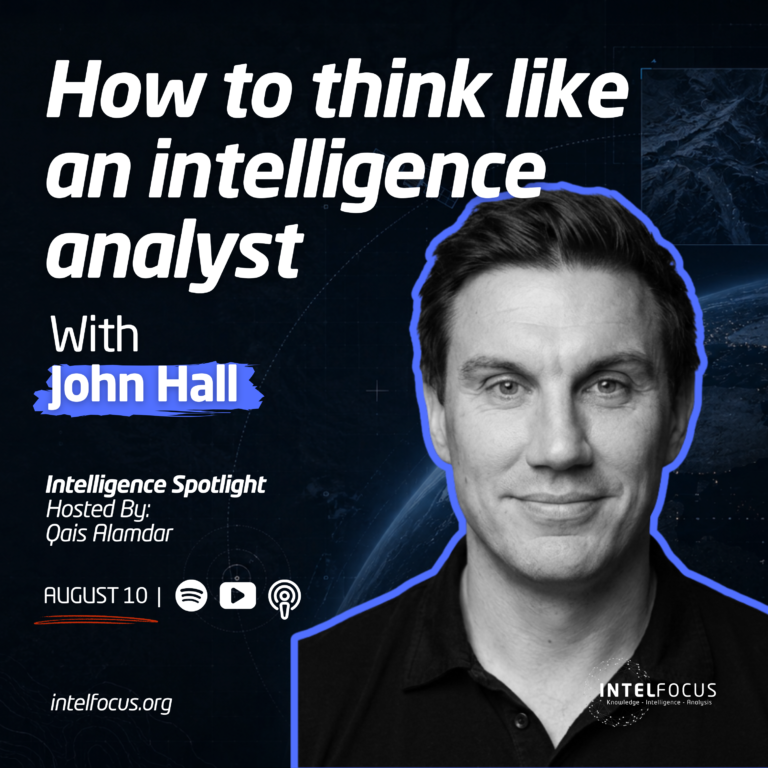
How to think like an intelligence analyst | John Hall
The rapid growth of open-source investigation has blurred the boundaries between journalism, intelligence and publicly available information. For…
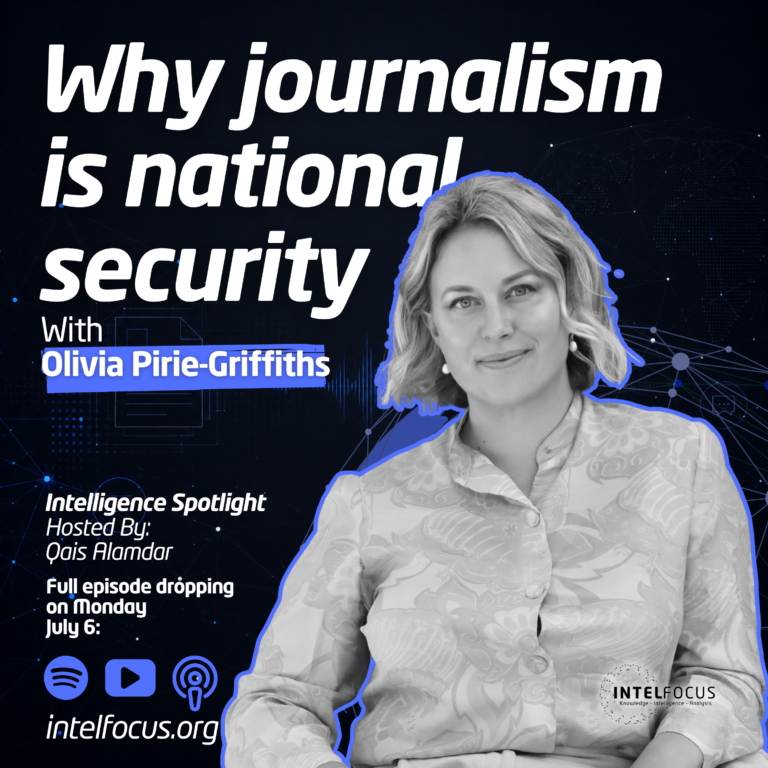
Why journalism is national security | Olivia Pirie-Griffiths
Journalism is facing more than a crisis of funding or trust. For Olivia Pirie-Griffiths, the pressures confronting journalism,…

“These values are not idealistic”: can the EU still defend its principles? | Dr Berit Ebert
Spotify content is blocked This embed would set cookies from a third party, so we only load it…