Mines, money and middlemen: inside the Taliban’s resource deals with Beijing-linked firms
Author & investigator: Ava Gough
A summary
This report examines the partnerships between Chinese-linked companies and Afghan entities involved in the Amu Darya oil project and the Samti gold mine that are suspected of operating in association with Haji Bashir Noorzai. It explores allegations that allude to Noorzai functioning within these ventures and evaluates how opaque corporate structures, claims of political patronage and sanctions-era financial systems shape Afghanistan’s natural resource sector. The objective is to assess whether these specific joint ventures represent legitimate commercial investments or serve as potential mechanisms for alleged corruption under Taliban rule, including revenue consolidation, elite enrichment and terrorism financing. To achieve this, we have aimed to map networks of influence, highlight gaps in transparency and provide an evaluation of the governance and security risks associated with these ventures via publicly available information and claims.
Our assessment is based exclusively on open-source intelligence. We conducted a structured review of corporate filings, archived company websites, contract documents, sanctions records, Taliban and state announcements, investigative journalism, local reporting, social media activity and publicly available corporate databases. Information was cross-referenced to identify what appear to be inconsistencies in company timelines, ownership disclosures, investment commitments and reported revenue flows. A majority of the sources included in the reports we reference remain anonymous, so we cannot independently verify their credibility. We would also like to note that public opinion regarding some of the organisations listed is mixed, in part due to the restrictions placed on Afghan-affiliated journalism. Where claims could not be independently verified, they are presented as allegations attributed to said organisations. We do not confirm malpractice or corruption of any certain person or entity, nor allegations made against them from sources mentioned.
Is Noorzai a mining middleman?
After arriving back to Afghanistan in 2022 following a 17-year imprisonment in the U.S., a formerly convicted narcotics trafficker and Taliban ally Haji Bashir Noorzai has allegedly entered the country’s natural resource sector with Chinese entities and Taliban support.
On January 5, 2023, the Taliban signed their first joint venture (JV) oil agreement since taking Kabul in 2021. The agreement was between the Afghanistan Oil and Gas Company (AOGC) and Xinjiang Central Asia Petroleum and Gas Co. Ltd. (CAPEIC), described as a restructured branch of PetroChina and anoffshoot of one of China’s largest state-owned natural gas producers and suppliers, CNPC. The Taliban also signed a gold mining contract in August of that year with a JV often referred to as the “China-Afghanistan Company.”
It is our understanding that Noorzai is suspected to be involved in these murky agreements as an informal power broker and beneficiary, but that no official confirmation regarding these claims has been made. This report examines the Chinese companies that have received allegations of operating in conjunction with Noorzai, beliefs of his involvement and how these ventures’ business dealings intersect with broader instability and corruption in the region.
Overview of ties between China, Afghanistan and Noorzai
When the U.S. exited Afghanistan in 2021, China was one of the first countries to solidify its foothold in the region. Although a top foreign investor, China has yet to formally recognise the Taliban government. With little global recognition, ongoing international sanctions, frozen assets and a primarily informal banking system, the Taliban has worked to foster partnerships with companies from countries like China to help develop their natural resource sector, which is believed to contain over 1 trillion dollars worth of mineral resources. Such agreements are awarded by the de-facto government, fueling concerns regarding these operations and their transparency.
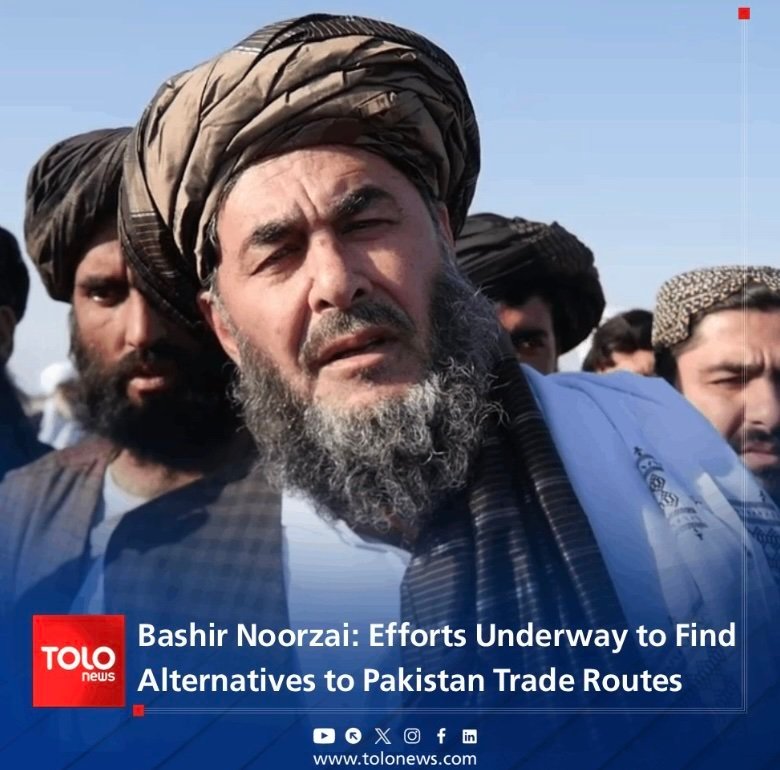
Although not a government official, Noorzai has long been considered an important Taliban financier and Kandahar loyalist. Last December, he was shown speaking on some of the Taliban’s diplomatic decisions and was labeled as a businessman and supporter of their government by TOLOnews, an Afghan TV news network. While this clip does not confirm any claims of Noorzai’s involvement within the resource sector or Chinese companies, it provides some insight into his current relationship with the Taliban. Compared to Noorzai’s seemingly close ties to them, China’s involvement with the Taliban has been framed as more pragmatic, using their diplomacy as a means to gain access to Afghanistan’s resource sector, expand their Belt and Road Initiative and protect its Western border from security threats.
Even with ostensibly formal oil and mining contracts, there is minimal verifiable open-source documentation regarding where, or to whom, the profits from Afghanistan’s resource collaborations go, including earnings from these specific Chinese-linked JVs. Local reports have claimed that the wealth from Afghanistan’s resource sector has not reached much of the public, with Rare Earth Exchanges estimating that around 42% of mining revenue in Afghanistan leaks to corruption, middlemen and armed actors, while nearly 22 million Afghans are projected to require humanitarian aid in 2026. While this data cannot be entirely attributed to suspected corruption in the sector, it does align with protests and accounts from locals expressing grievances related to certain resource operations.
Noorzai’s potential relation to Afg-Chin Oil & Gas Ltd.
Noorzai’s alleged connection to Afg-Chin Oil & Gas Ltd., the JV between AOGC and CAPEIC, was not reported in international media until 2024. That year, Lynne O’Donnell, who has provided in-depth coverage of Afghanistan over the past two decades, wrote an analysis on his ties to the Chinese-linked operation for Foreign Policy.
She quoted Javed Noorani, an independent researcher and Afghan mining expert, who said that Noorzai obtained the JV agreement through non-transparent bidding and his friendship with the Taliban’s supreme leader, Mullah Hibatullah Akhundzada. One of O’Donnell’s sources said Noorzai is also close with the Taliban’s acting foreign minister, Amir Khan Muttaqi, who they claimed has a tight grip on oil contracts.
Aside from this report, which also mentioned Noorzai’s alleged links to the Samti mine, discussion surrounding his involvement with the oil company remains minimal. However, more widespread media coverage on AOGC and CAPEIC reveal that there were still concerns related to prominent figures involved in their now terminated collaboration.
The collapse of the Amu Darya oil deal
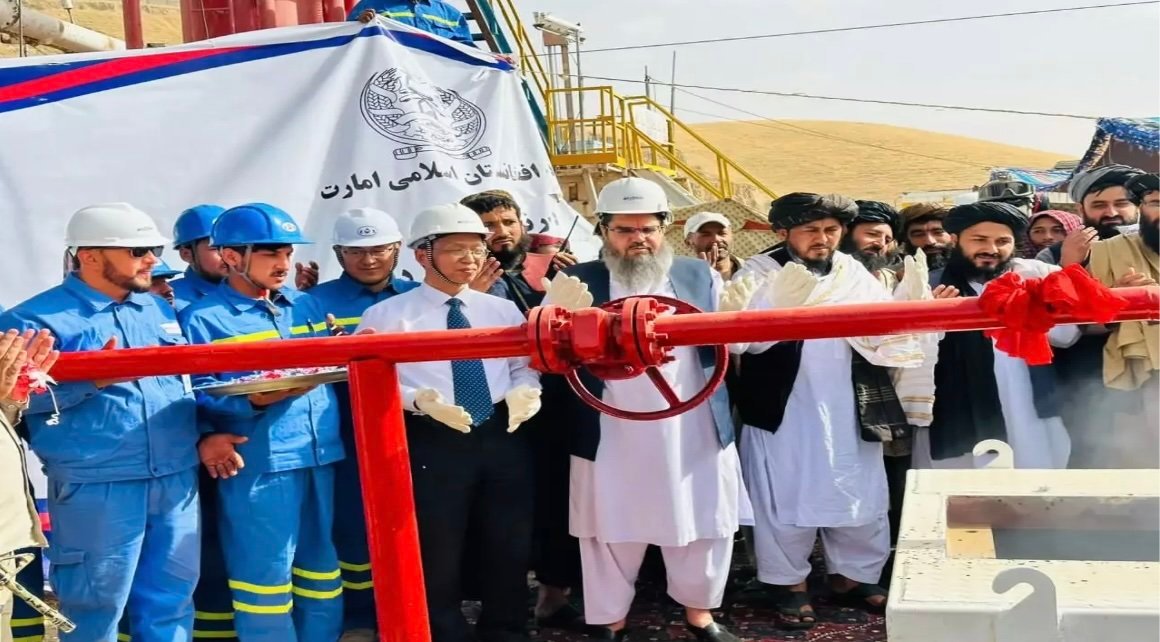
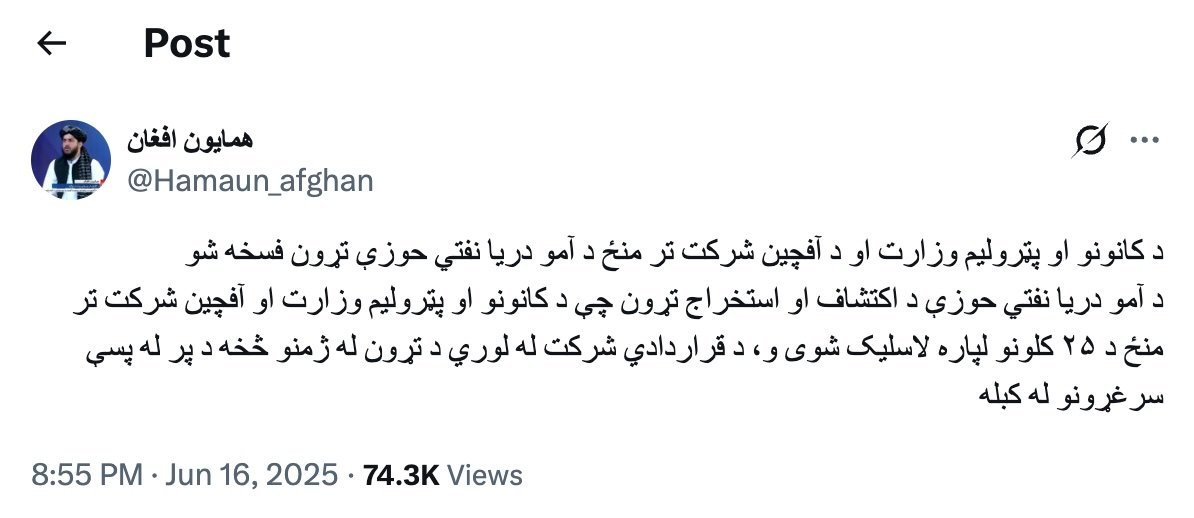
Afg-Chin Oil & Gas Ltd. was meant to be a 25-year contract in northern Afghanistan’s Amu Darya River Basin. CAPEIC pledged to invest $150 million in the first year, and $540 million within three, but the Taliban severed the deal in June 2025, claiming CAPEIC did not fulfill its contract obligations.
It was reported by VOA that CAPEIC only invested $49 million in the first year, generating $26 million for the Taliban. In 2025, AMU TV, a multimedia company that provides frequent coverage of Afghanistan, claimed that crude oil sales, primarily from Amu Darya, exceeded $80 million and that its revenue reached $137 million in their January 2026 report. According to their 2025 article, secrecy over revenue and investments grew after Mullah Hedayatullah Badr, the former head of Da Afghanistan Bank, took over the role of the Ministry of Mines and Petroleum in July 2024. He was replaced by Noor Ahmad Agha, who was the Taliban’s First Deputy Governor of the bank. Like Noorzai, both individuals are longtime Taliban loyalists. They also both remain under international sanctions for alleged involvement in financial terrorism.
The CEO of AOGC, Mohammad Nasir Rahimi, is not a Taliban member, but he was accused of appointing his associates to prominent roles within the company by AOGC workers. Just months into the JV, 8am Media, the English-language version of the Afghan newspaper Hasht-e-Subh, reported that employees raised concerns regarding favouritism, coercion, death threats, demotions and unauthorised promotions within certain AOGC circles. The outlet added that the company’s Taliban affiliates supposedly received salary and benefit increases and highly paid positions based on their requests. Their sources also made claims about manipulation of reserve repairs, embezzled funds and misuse of government resources.
After the agreement was concluded, two anonymous CAPEIC employees came forward alleging they and their colleagueswere extorted by Afghanistan’s Ministry of Mines and Petroleum and the Taliban. Their testament of the events, given to NPR in August 2025, included violent intimidation, passport confiscation, hostage taking and demands to abandon their equipment and Kabul bank account. They also said they were told to share a written pledge stating they voluntarily exited the agreement. Like the claims made by AOGC workers, these have not been confirmed by the Taliban, Chinese officials or CAPEIC, and AOGC is said to continue the JV independently.
A look into CAPEIC’s background
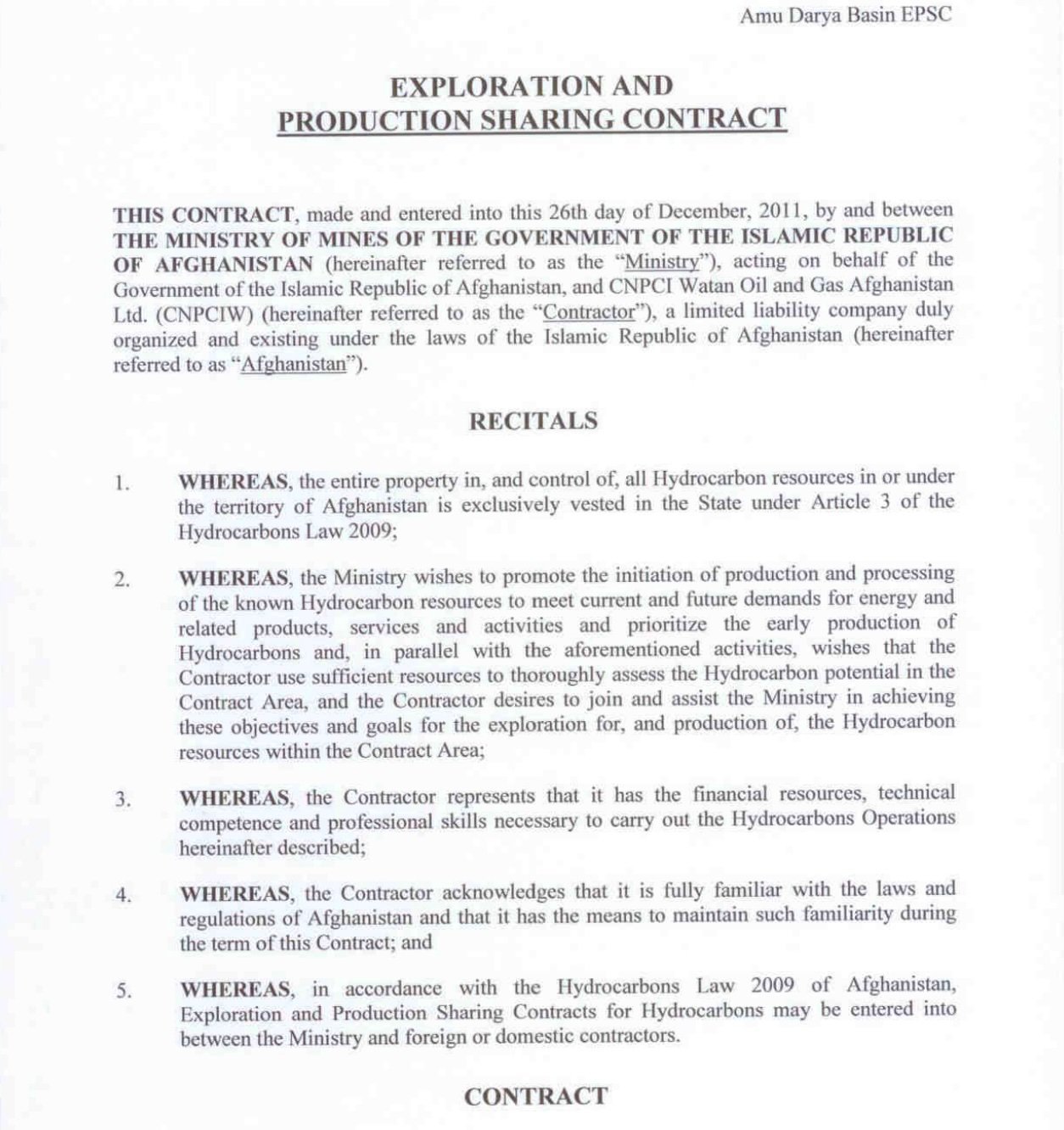
Upon further research into CAPEIC’s venture with AOGC, it was discovered that the agreement seems to mirror a 2011 contract previously shared by another CNPC subsidiary, CNPC International, and the Afghan Watan Group. In a 2023 report, Javed Noorani and Ghazel Habibyar, an economist and freelance consultant, noted this and said that not retendering the agreement from 2011 and giving it back to another CNPC subsidiary was illegal.
We also discovered an alleged additional agreement between CAPEIC and the Watan Group, which was announced by Ariana News, a private Afghan television and radio broadcaster, in July 2023. The JV, Fan China Afghan Mining Processing and Trading Company (FAMPTC), was said to be investing $350 million across various sectors in Afghanistan. The news of FAMPTC was also shared in a tweet by ARG Palace, but from what we have found, neither company has claimed it nor have there been updates on the JV’s activity or evidence of a contractual commitment.
Another pledge for further investment in Afghanistan from CAPEIC was made in September 2024 by Li Wenbin, the company’s chairman, whose background prior to CAPEIC remains uncertain. In a series of tweets made by the AFG Embassy in China, they said an investment of $100 million worth of machinery and equipment for the Amu Darya project would be made and that Wenbin intended to introduce university training courses in China for Afghan workers, which was echoed by Ariana News and Khaama Press, an online Afghan news agency. According to TOLOnews, who quoted the spokesperson for the Ministry of Mines and Petroleum, the machinery arrived on site by December 2024. Later, in October 2025, China University of Petroleum published a synopsis of a visit from Wenbin, where they said he expressed gratitude for the training provided to 10 Afghan management and technical project staff the previous year. Aside from these exchanges, CAPEIC and their former JV’s financial movement remains ambiguous.
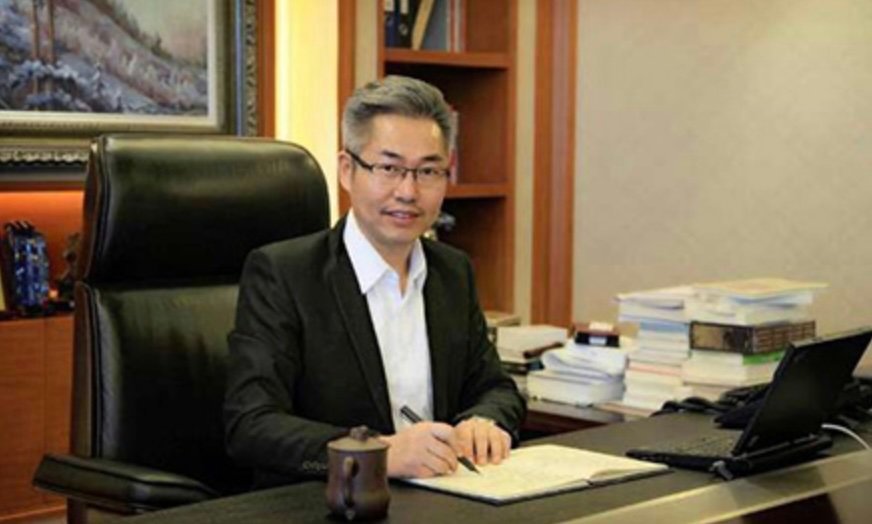
Given CAPEIC’s status as an unlisted limited liability company (LLC), it is not required to disclose as much information about its employees, operations and finances as China’s publicly traded state-owned ventures. The only other name we found tied to the company is Zhang Junwei, who is listed as CAPEIC’s legal representative. Like Wenbin, Junwei’s background appears to only consist of his CAPEIC title, which, as a legal representative, is said to make him primarily responsible for executing corporate affairs on behalf of the company and bearing its legal consequences.
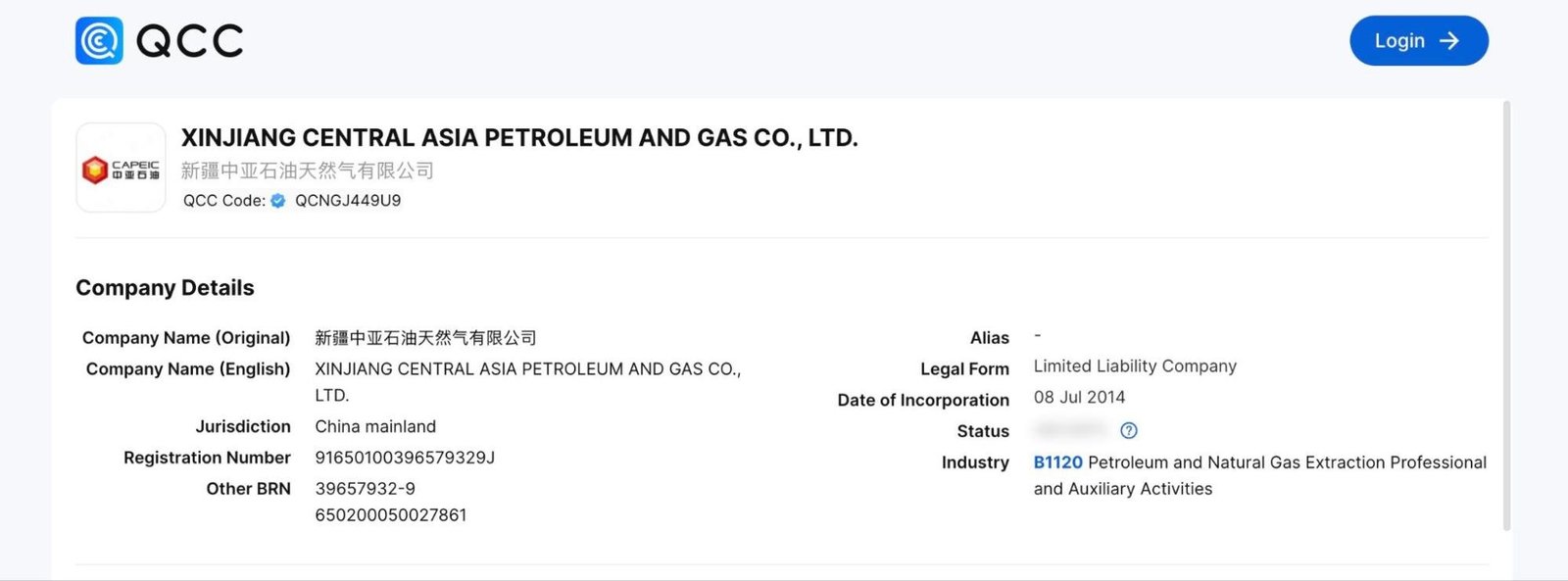
Through Chinese company platforms like Cnverify and Qichacha, we also discovered CAPEIC allegedly has between 0-100 employees, a registered capital of over $17,000,000, but no public listing of paid capital, and was established in China in July 2014. On CAPEIC’s website, however, its founding date is listed as June 2000. This discrepancy could potentially be explained by its origins in PetroChina Xinjiang Oilfield Company, the CNPC subsidiary that CAPEIC is said to be restructured from, as the entity may have operated under a different name during a period of identity change. This would help make sense as to why CAPEIC’s declared projects prior to Afg-Chin Oil & Gas Ltd. are difficult to trace and why its website, which appears not to have been updated since 2016 after being registered in 2011, is rather vague.
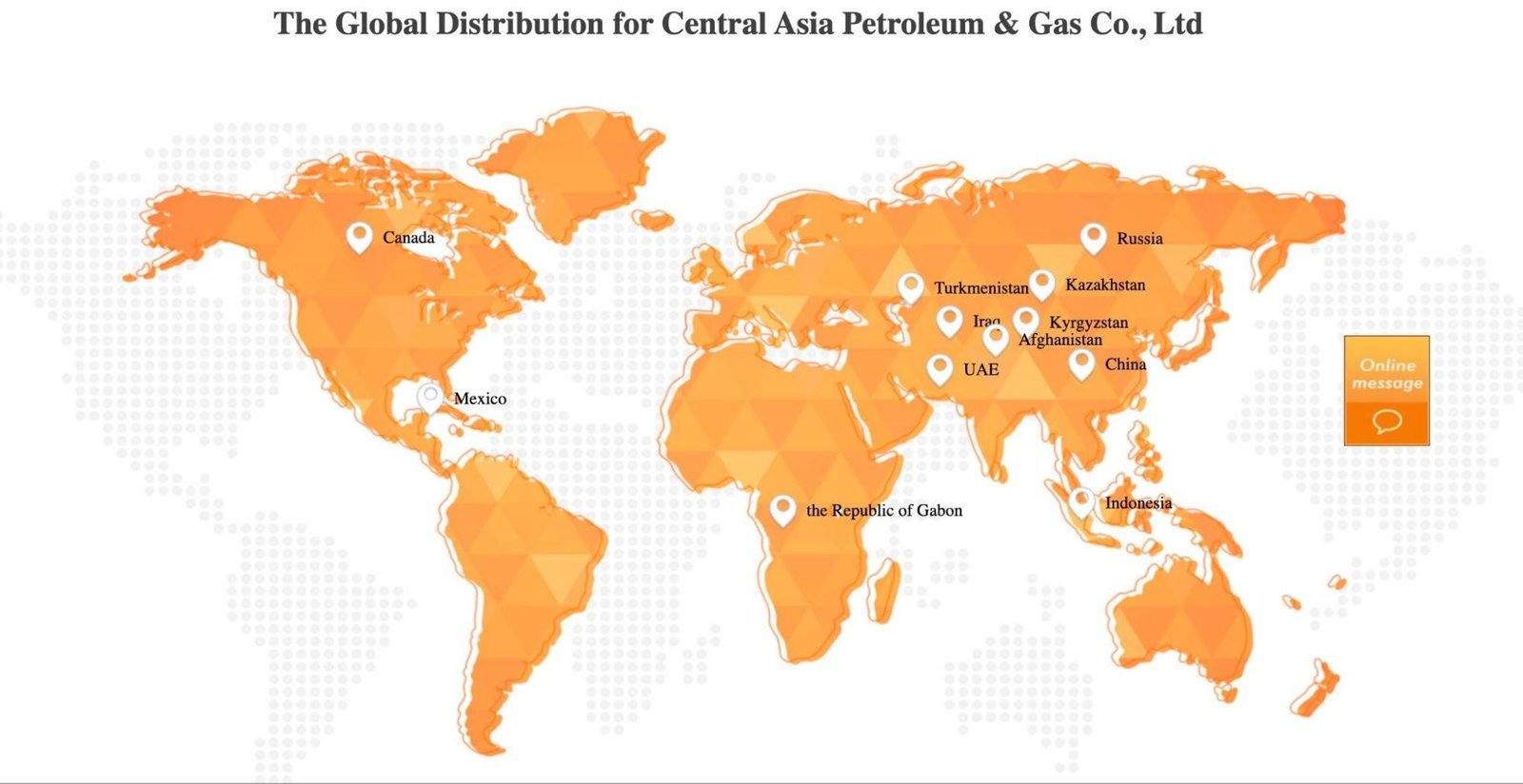
In Wenbin’s 2016 announcement, he briefly mentioned CAPEIC’s projects, the most recent being in 2014, making the gap in operations until its 2023 JV appear questionable, even if the offshoot did assist in others before its public establishment. That is, unless they participated in some but refrained from documenting them after 2014. The locations listed on its business map include Canada, Mexico, the Republic of Gabon, the UAE, Iraq, Turkmenistan, Kazakhstan, Kyrgyzstan, Russia, Indonesia, China and Afghanistan. Not all locations are listed on its contact map, but those that are have an associated CAPEIC email, excluding Afghanistan. We could not independently verify which, if any, are locations CAPEIC has worked.
Regardless if CAPEIC was involved in projects prior to Afg-Chin Oil & Gas Ltd., its opaque timeline, staff, operations and finances, paired with its alleged involvement with corrupt Afghan entities, make its credibility difficult to determine. CNPC’s history of employees engaging in misconduct and questionable overseas activity adds to this uncertainty.
CNPC’s history of corruption
The BBC shared that in 2013, Chad suspended CNPC’s oil operations in the country due to the environmental damage they caused via oil spills that they made local workers handle unprotected. After they were fined $1.2 billion, CNN reported that former Hong Kong Home Affairs Secretary, Patrick Ho, who also previously led an energy NGO, presented bribes to Chad that are believed to have caused the fine for CNPC to be reduced to $400 million. More recently, on October 23, 2025, CNPC’s subsidiary, Liaoyang Petrochemical Company, was listed as an EU-sanctioned company due to it being one of the leading processors of Russian-sourced crude oil, in turn helping them finance their war in Ukraine. CNPC has worked in several other locations enduring or contributing to violence and corruption as well, including Myanmar, Iran and Sudan.
CNPC employees have also been investigated for corruption. Zhou Yongkang, the former Minister of Public Security of the PRC and previous CNPC general manager and party secretary, was sentenced to life in prison in 2015 for accepting bribes up to $21.3 million, abusing power and disclosing State secrets.
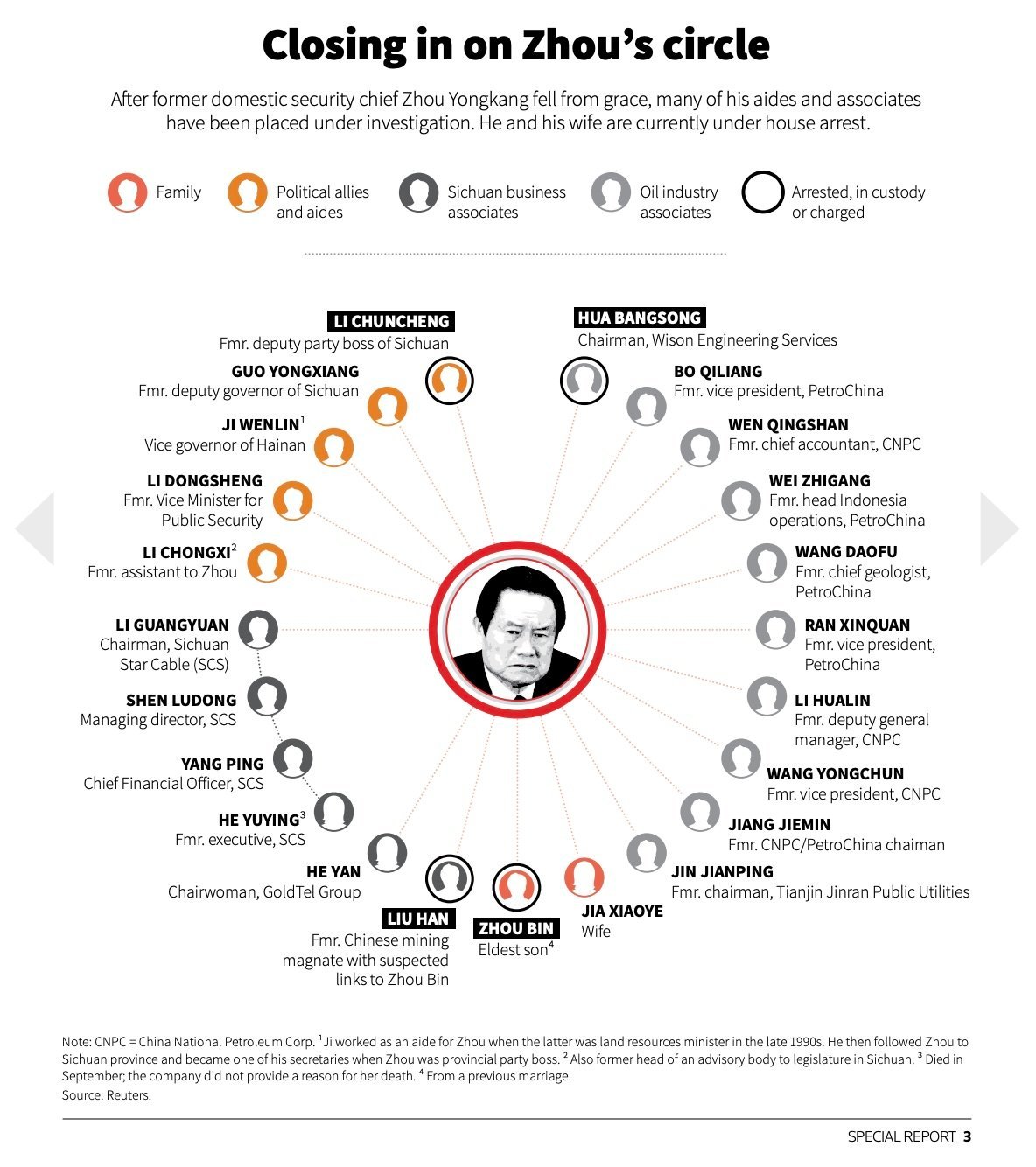
His unlawful activities outed those of several of his CNPC acquaintances, too. This included former CNPC and PetroChina Chairman, Jiang Jieman, who was imprisoned for receiving bribes, possessing large amounts of assets of unknown provenance and abusing power as a state-owned company employee. Former PetroChina Vice-Chairman, Liao Yongyuan, who also previously worked for CNPC, was sentenced for bribery the same year. Last May, Wang Yilin, who took over as CNPC chairman in 2015, was sentenced to 13 years in prison after being under investigation for illegally accepting high-value assets and taking advantage of his position to help others seek benefits in project contracting.
Noorzai’s links to gold mining
Allegations regarding Noorzai’s suspected involvement in the Samti gold mine in Chah Ab have circulated in the media since 2023. In his research for ThinkChina, an English-language e-magazine, Javed Noorani claimed that Noorzai is the Afghan partner in the JV project, whose full name on the contract is China-Afghanistan Dayunlong Zeren Mining Company (CAD ZEREN).
Noorani described the agreement as a “Haji Bashir family-backed joint venture,” and said that he believes it is essentially a trading company owned by Noorzai and obtained through political ties. He added that to get it, Noorzai likely sold some shares to a Chinese partner responsible for gathering investments from small-scale developers in China.
Upon further investigation into the enterprise via job board and social media posts, we learned that its headquarters are said to be located at the Park View Hotel in Kabul, and that it has at least one alleged member active on a professional platform, where they commented on a post agreeing with a presumed peer’s frustration regarding the nepotism and political ties in Afghanistan’s job sector. In 2023, one job board, Scholarships.af, directed site-goers to CAD ZEREN’s official website, which does not presently exist.
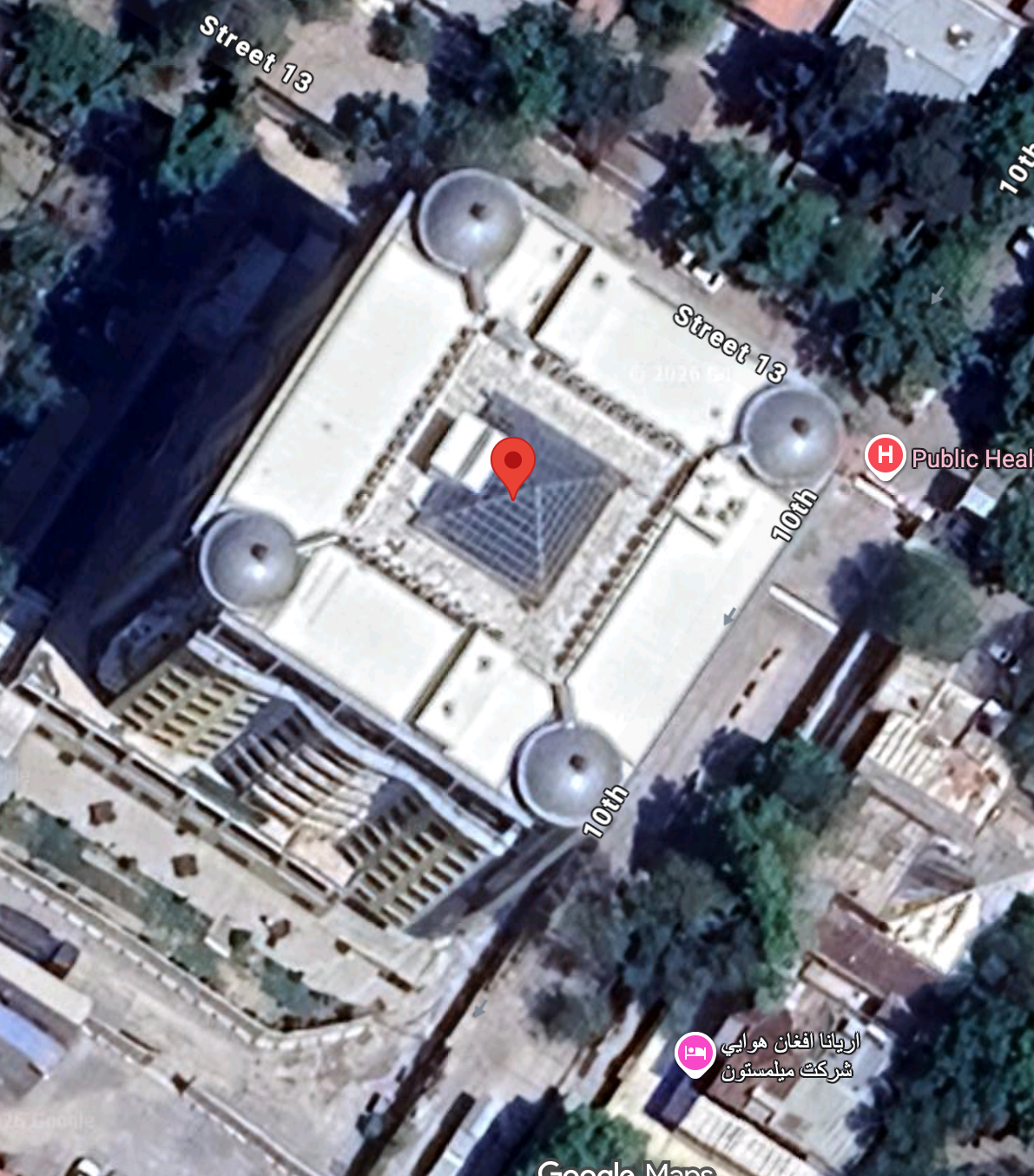
According to Ariana News and the DPMEA, the JV’s shareholder is the Zarawar Afghanistan Private Company, which also does not have a website or online presence, and is not listed on the contract. An entity called “Lao Lido Mining Company” is recorded under the “participants” section with CAD ZEREN, though, but does not appear elsewhere in the media or contract. While CAD ZEREN, the main contracting body, receives 45% of shares, Lao Lido Mining Company holds 55%. Based on their lack of history and what appears to be potential layered ownership, it is possible CAD ZEREN is a vehicle for the beneficiaries of the Zarawar Afghanistan Private Company and the Lao Lido Mining Company, which could be run by local entities, Chinese stakeholders or a mix of both.
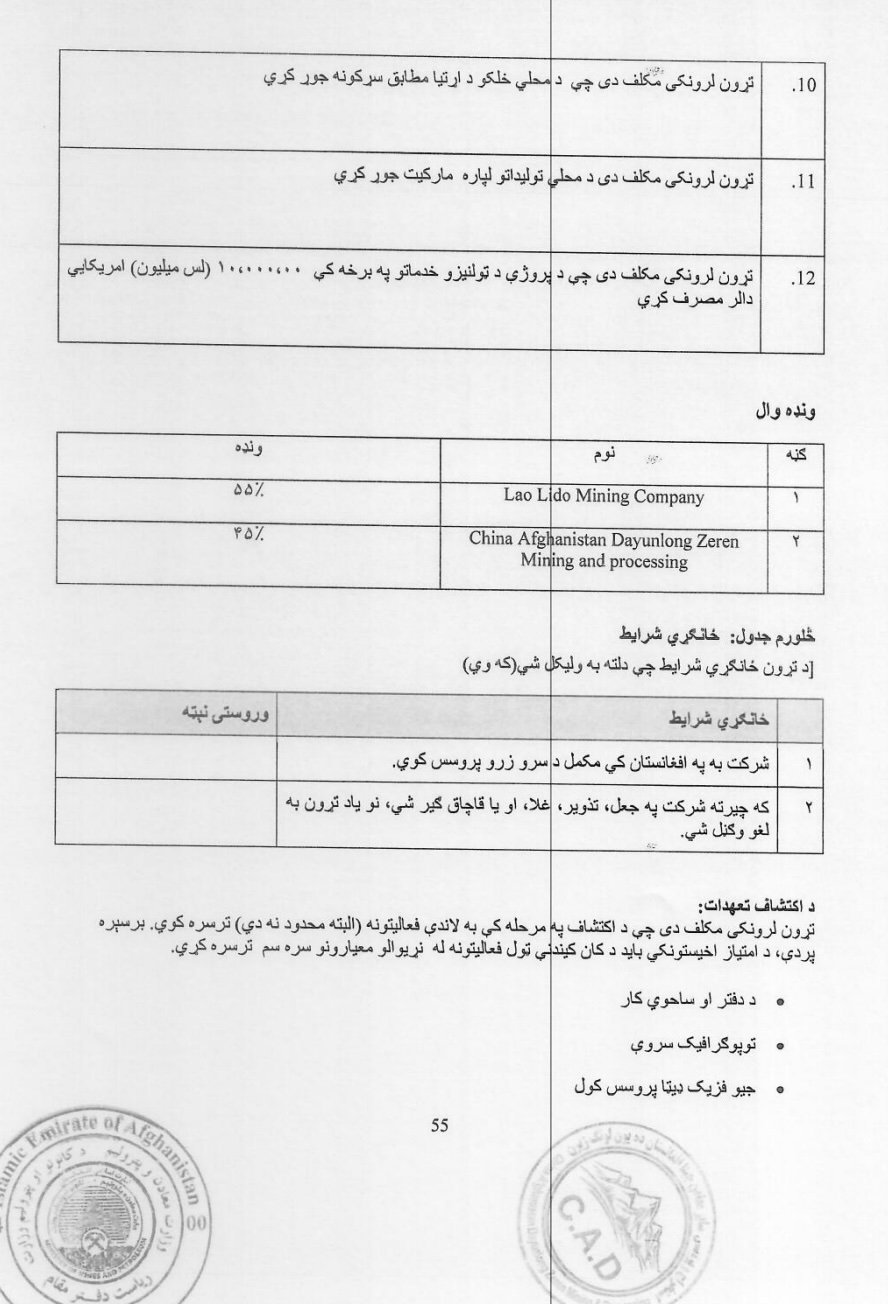
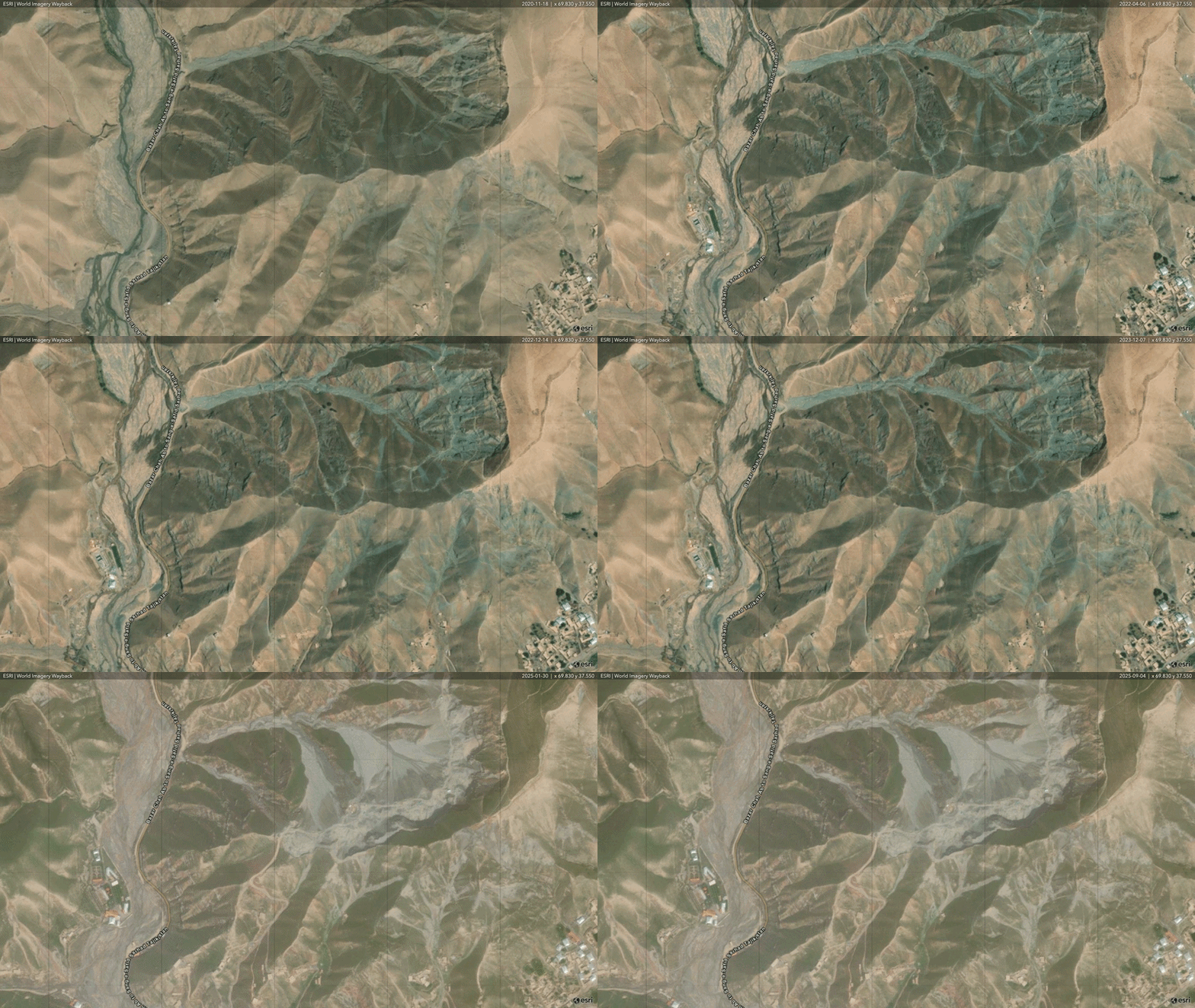
In addition to Noorani, AMU TV confirmed that CAD ZEREN’s five year contract, signed on August 31, 2023, pledged to invest $310 million in three years, with 56% of the profits going towards the Taliban government. While we have found virtually no open-source information on the mining project’s conception in 2023 or formally documented financial flows, it is evident from protests that its profits are not substantially reaching the public.
It is believed by some organisations and analysts that large amounts of the northern gold mining revenue goes into the Taliban’s pockets and those of their affiliates, including terrorist organisations. According to recent reports from Afghanistan International, a news and current affairs TV station in London, and the UN, terrorist groups like al-Qaeda remain active in Afghanistan. The UN report said that most groups have worked to maintain good relationships with the Taliban, which has absorbed some former fighters from various terrorist groups into their local security forces. 8am and Foreign Policy have said that al-Qaeda has received profits from them that come from Afghanistan’s northern gold mines, which are also allegations included in reports by the University of Exeter and Small Wars & Insurgencies, a peer-reviewed academic journal.
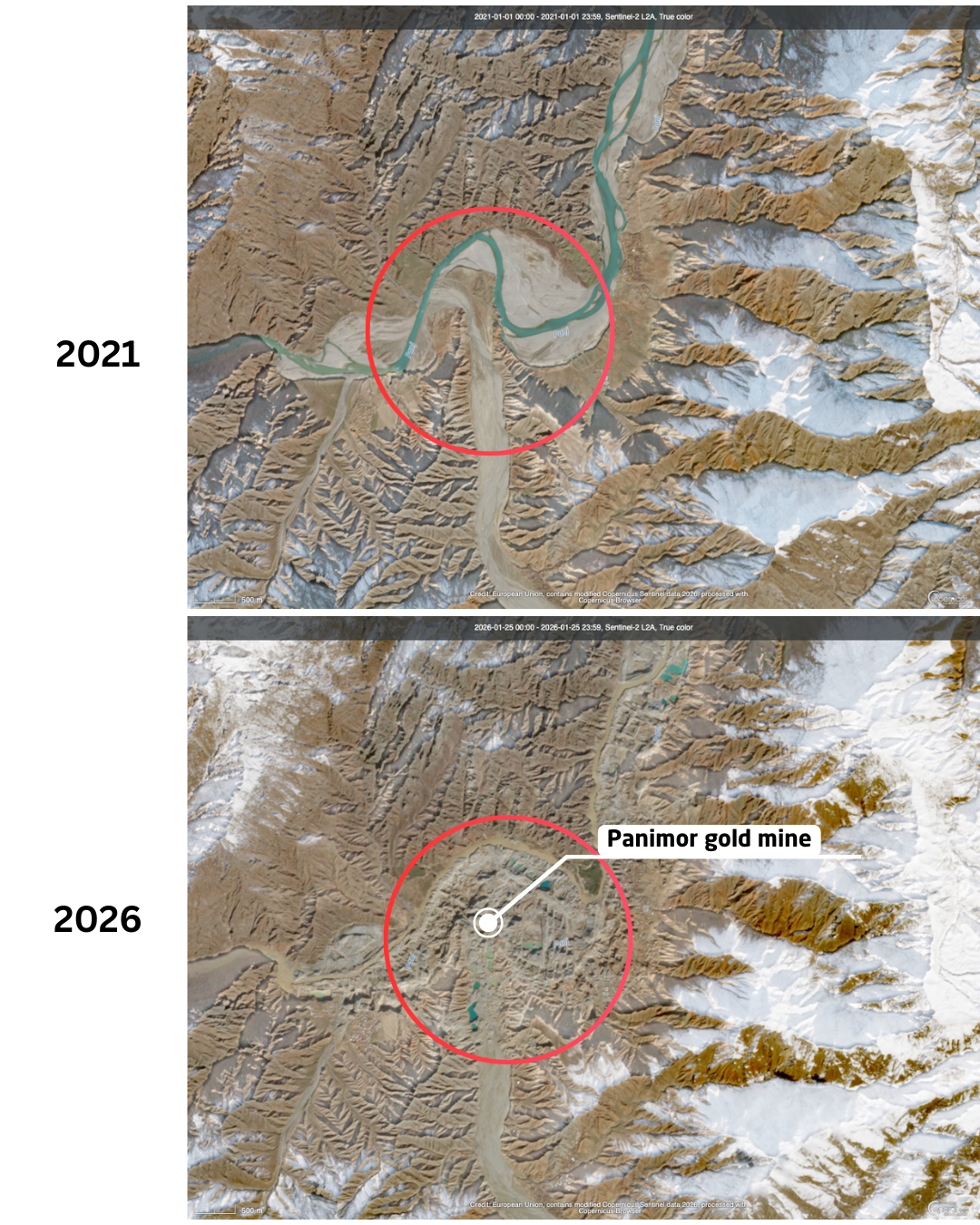
After the project began last year, following an exploration period, protests in the Samti area began. In a video posted to X (Twitter) last February by Habib Azizi, who identifies himself as a freelance journalist covering Afghanistan, a local elder addressed the crowd, describing the protest as “peaceful” and voicing grievances over what he called longstanding injustices against the people of Samti. He also accused unidentified companies of destroying local forests and damaging the environment. The video of his statement, also referenced in a Centre for Information Resilience report, reflects the frustrations shared by locals today. Protests earlier this January against the Samti mine left at least three locals and a Taliban guard dead, with 20 others injured. According to Afghanistan International, local sources said the mining companies are engaging in unregulated work and are connected to Noorzai and the Taliban.
The people behind CAD ZEREN
The individuals linked to the Samti mining project and their exact involvement in it are as much of a puzzle as its financial flows, but assertions from local reports claiming Noorzai takes part in the plundering in Chah Ab remain consistent, although unproven.
Last March, Afg Green Trend, an anti-Taliban activist organisation founded by Afghanistan’s former spy chief and vice president, Amrullah Saleh, shared multiple claims about CAD ZEREN on X. In their post, they described the JV as multiple Chinese companies collaborating with Noorzai. They also said 11 mining projects have been delegated to local Chah Ab affiliates of Noorzai’s network and criminal operatives, who pay a portion of their earnings to him. Additionally, they accused Noorzai and his partners of money laundering and leveraging proceeds from his narcotics trade via the contracts, which he allegedly revived upon his return in 2022, and was said to be active as of late 2023. The UN also noted that narcotics trafficking continues to dominate the country’s informal economy and sustains criminal organisations, traffickers and even some State actors.
In an earlier tweet from them on January 28 of last year, Afg Green Trend said that Noorzai and a Turkmen shareholder from the Faryab Province, represented by a man named “Dr. Mytham Ahmadi,” are partners in the venture, and listed a Chinese man called “Stephen” as the main shareholder. They said the three shareholders receive 44% of the mining profits, aligning with Zarawar’s reported share, while the rest go to the Taliban, including the Taliban governor in Takhar Province, Haji Agha Qandahari, the security commander of Takhar, and Amanuddin, the Taliban army corps commander in Kunduz.
The South Asia Terrorism portal and 8am also made claims about the roles of the Taliban and Noorzai in the gold mining and alleged mineral looting in Takhar. In November 2025, they reported that Noorzai and Zabihullah Ansari, the Taliban’s Director of Information and Culture, were working with Chinese engineers in the Qala-Hasar and Ai-Khanoum regions.
This January, former TOLOnews correspondent and current Afghanistan International Pashto producer, Abdulhaq Omeri, said Noorzai owns the mines, is financially close to Mullah Haibatullah and that he carries a Pakistani identity card and smuggles Afghan gold into Pakistan. The same 8am report that accused al-Qaeda of accessing gold mining revenue also said that gold and other precious stones are brought through Pakistan, and provided a multitude of other accusations about the mining sector, including one alleging Noorzai’s involvement.
In February, the Times of Central Asia, an English-language news outlet covering the region, published an article detailing a report from ExpressAsia’s Telegram channel on the security concerns related to Afghanistan’s northern gold mines. They said the report claimed that 30 enterprises are linked to Haji Bashir Noorzai and that five Chinese and two Turkish companies operate in the area. The outlet also added that profits from the mines are believed to go to armed groups and intermediaries. We would like to note that we viewed ExpressAsia’s channel, but have not seen additional coverage from the outlet or a description of the organisation in separate searches.
Shadow economies and companies of China and Afghanistan
In addition to a shared interest in the natural resource sector, China and Afghanistan also have murky financial systems in common. These systems, although not identical, allow opaque entities like Afg-Chin Oil & Gas Ltd. and CAD ZEREN to engage in dodgy ventures, if desired.
Afghanistan’s entire economic structure is unclear due to the Taliban’s rule and the country’s banking system, which is run by an internationally sanctioned Taliban member. The system is also primarily dominated by hawalas, which are informal networks that allow the transfer of money across entities and borders via brokers, without physically moving currency. They have been used for money laundering, which is what Afg Green Trend believes Noorzai is doing with his earnings from CAD ZEREN.
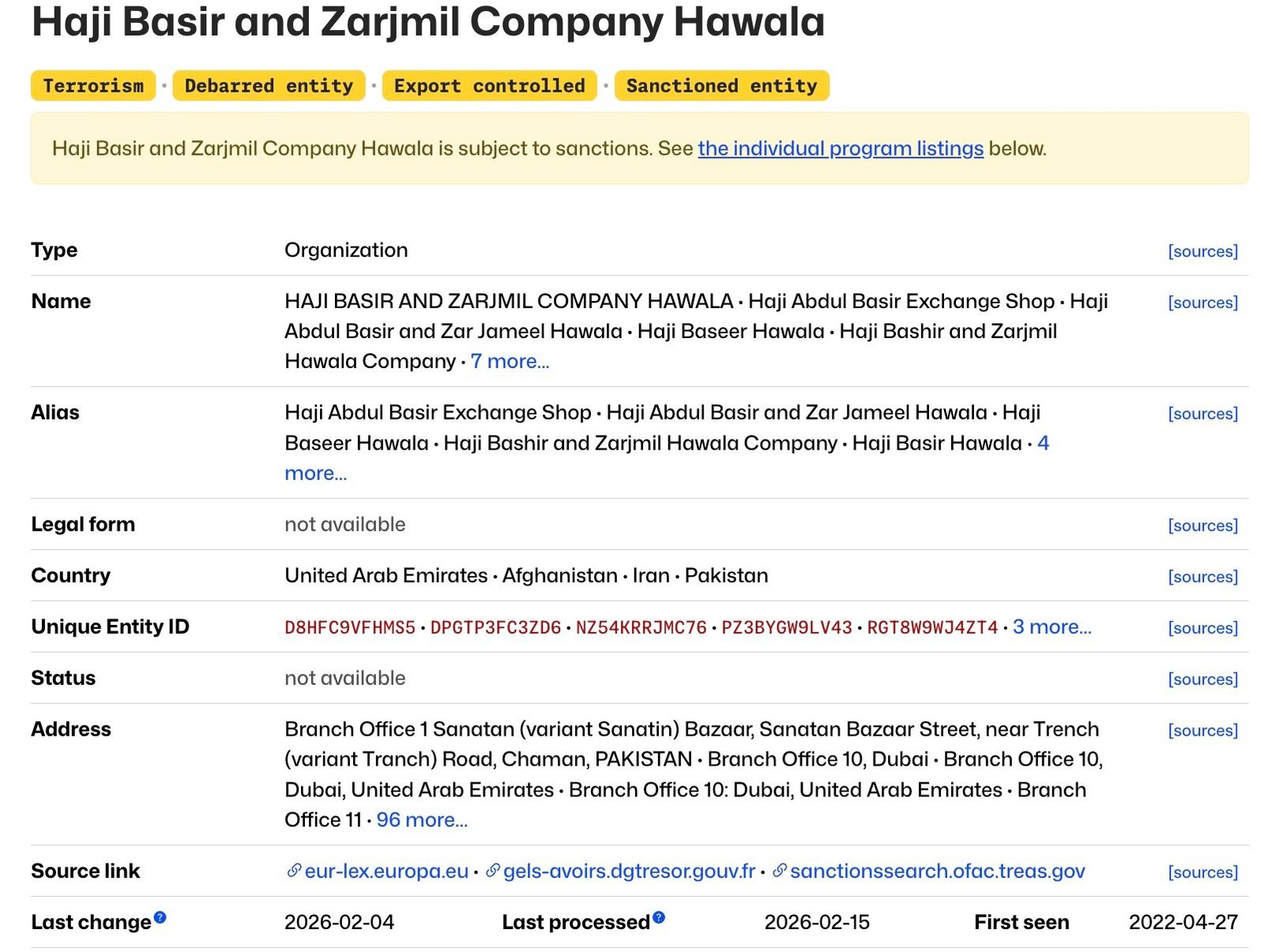
Noorzai’s hawala, Haji Basir and Zarjmil Company Hawala, has been sanctioned for assisting in financial terrorism. Although there is no firm proof it is still in use, it was known to operate in Pakistan, Afghanistan, Iran and the UAE.
China has a formal economy but also struggles with a shadow banking sector and informal money transactions known as “feiqian” or “flying money,” which operate similarly to hawalas. According to Seafarer, an investment advisor in California focused on emerging markets, shadow banks are, “financial intermediaries that conduct maturity, credit and liquidity transformation without explicit access to central bank liquidity or public sector credit guarantees.” In short, they are financial companies that act like banks, but act outside of formal banking regulations.
Last December, the New Lines Institute, an American think tank, said these informal operations stem from the domestic financial tensions in China and contribute to the growth of global criminal and insurgent activity, which the Taliban is suspected of enabling.
Because the ownership and shareholders of CAD ZEREN and CAPEIC are not publicly disclosed, they are able to operate more discreetly than companies listed on public stock exchanges in China, which require clear financial and operational transparency. On CAPEIC’s outdated website, it states that they are preparing to be listed on China’s stock market, but as of today, they remain an active LLC. Afghanistan has no stock market and bypasses international obligations for transparency.
With their ambiguity, alleged connections to Noorzai and the economic systems in China and Afghanistan, it raises the possibility that the joint ventures would be able to avoid formal banking systems when moving profits around while maintaining the facade of a transparent company on paper. We assume this is less likely in CAPEIC’s case, at least now, given that they no longer operate in Afghanistan, claimed to utilise a bank in Kabul and because there are fewer accusations regarding connections to internal or external nefarious actors than CAD ZEREN.
The assessment of Intel Focus
This report examines the partnerships between Chinese entities and the Taliban that have been accused of operating in association with Haji Bashir Noorzai, as well as the influence of the broader ecosystem in which they exist and their potential contribution to regional corruption.
While claims of Noorzai’s connection to the Samti mine have appeared quite consistently since 2023, Intel Focus cannot independently confirm his involvement in CAD ZEREN. If involved, we believe he could be an informal power broker and beneficiary, given his lack of mining experience, accounts from sources describing his suspected role, history of financial involvement with the Taliban and previous reports of well-connected local actors engaging in Afghan mines this way. Although the allegations alluding to his involvement in the Samti mine lead us to believe he could be connected, it is unlikely official or accurate confirmation will come from the Taliban, nor named inside sources.
Noorzai’s involvement in Afg-Chin Oil & Gas Ltd. also remains unconfirmed, with few assertions, aside from O’Donnell’s 2024 Foreign Policy report featuring Javed Noorani, available. We do not dismiss their claims and recognise them as reputable sources, but we cannot independently verify their assertions. It can be assumed that no transparent disclosures from the de-facto government will reveal Noorzai’s suspected involvement in this JV either.
Whether or not Noozai is connected to these companies, we believe the reports on the two JVs strengthen the longstanding case for nepotism and patronage within Afghanistan and its natural resource sector. These claims are primarily supported by 8am’s report on AOGC’s treatment of workers, NPR’s piece sharing CAPEIC workers’ claims of extortion and the Taliban’s direct involvement in monitoring and awarding such deals. The comment published from an alleged CAD ZEREN worker agreeing to the sector’s nepotism further adds to these assertions. While the specific allegations of misconduct involving the Taliban and AOGC have not been publicly confirmed, and we acknowledge that we cannot independently verify these claims, we recognise a concerning pattern of nepotism and patronage in the sector, requiring the anonymity of sources. This applies to the reports making claims about Noorzai’s involvement in these companies as well, though those have less of a historical track record.
The opacity encapsulating CAPEIC and CAD ZEREN constitutes another relevant finding about these companies. Although neither corporation is required to openly disclose its ownership, shareholders, financial or capital distribution, this lack of information allows essential aspects of their history to remain hidden that could support or dispute suspicions about them. For example, CAPEIC’s alleged underinvestments and lack of delivery compared to its contractual commitments, paired with its seemingly odd gap in work between its establishment and this agreement, raises questions about its credibility as an organisation. Its historical ties to CNPC, overtaking of a former CNPC affiliate’s contract and what seems to be a similar approach to overseas operations, makes its agenda more uncertain.
The unrest amongst locals, sparked by the Samti mine, is also notable in evaluating the CAD ZEREN project’s credibility and transparency. The Taliban has made efforts to depict its mining ventures as sustainable and important to Afghanistan’s development, but we know from the Samti protests that this does not align with the experiences of locals. Their frustrations also align with broader reported statistics regarding the number of Afghans expected to require humanitarian aid this year, and increase the confidence in our conclusion that the profits earned from the mines, specifically the Samti, are likely being consolidated within the Taliban and possibly their broader circle of affiliates. The secrecy surrounding oil revenue and sales, reported by AMU TV, and the Taliban’s widespread involvement in the mines also influenced this assessment. O’Donnell’s 2024 Foreign Policy report on al-Qaeda that alleged absent gold mining profits from Taliban budgets, paired with other sources like the UN who have echoed similar claims about terrorist groups operating alongside them, strengthen this judgement.
As for the ambiguity surrounding the JVs financial flows, we believe the information we provided about the operations of shadow financial networks in both China and Afghanistan represent plausible underground transaction paths that these entities may utilise(d) in order to maintain secrecy of their capital movement. While not yet officially confirmed how, Intel Focus believes that some of those involved in the organisations made efforts to keep their profits discreet for unethical reasons, such as consolidation or distribution to inner circles, as described above.
Although we have gathered information that we believe alludes to credible accusations of corruption and malpractice within certain areas of Afghanistan’s resource sector and the ventures discussed, holes in knowledge remain. Some of the most notable gaps, aside from confirmation of Noorzai’s involvement, include the operational makeups of CAD ZEREN and CAPEIC, the role of the Lao Lido Mining Company in the CAD ZEREN contract and confirmed profit allocation from both groups.
Specifics regarding the ownership and shareholders of CAPEIC would supply us with the information needed to confirm the level or existence of CNPC’s influence on it, which could provide some intel on the intended trajectory or distribution of resources and capital of the organisation. This would also allow us to gauge the PRC’s proximity to it, given that CNPC is one of its largest state-owned conglomerates. Removing CNPC from the equation, similar intelligence could be gathered for CAD ZEREN. This includes the role of Lao Lido Mining Company and those included in the Zarawar Afghanistan Private Company. During our searches to find Lao-Lido’s history, we only learned of a group called Lao-LIDU Mining Company, Ltd., which is phonetically similar, involved in gold mining and is owned by Yunnan Mining Company, Ltd., a Chinese LLC. Despite some similarities, we cannot confirm that these are the same or related entities.
As for the allocation of both organisations’ profits, we are inclined to believe the Taliban could potentially be directing some earnings from the natural resource sector, specifically from its gold mining ventures like CAD ZEREN, towards associated terrorist groups. This stems from reporting done by sources like the UN, 8am and Foreign Policy, as well as the Taliban’s history of support for groups like al-Qaeda. However, we acknowledge any current assistance they may provide to these groups could also be funded from other ventures, if proven they are recipients of Taliban funds.
Because there is a lack of claims connecting oil extraction profits to such groups, we cannot provide further analysis on where Afg-Chin Oil & Gas Ltd.’s revenue may have gone. Given Afghanistan’s hidden and skewed budgets, we remain uncertain how much of the funds from CAD ZEREN goes towards the Taliban or affiliates, or how Noorzai may be utilising his profits if the accusations regarding his involvement are accurate. If proven to be involved, we would not yet rule out the possibility of Noorzai directing his alleged earnings towards drug trafficking, considering his background and a 2025 UN report claiming narcotics trafficking remains prominent in Afghanistan.
Reflecting on the above findings, we assess that these ventures function in a broader pattern of the Taliban’s alleged nepotism, political patronage and revenue consolidation within their circle. While official budgets do not allow for profits to be traced to specific members, affiliates or terrorist groups, the opacity of these contracts raises concerns. The Taliban’s seemingly close relations to entities like Noorzai and al-Qaeda, paired with allegations of their support for them, increases worries regarding the recipients of their mining revenue.
We also believe joint ventures like these, particularly Afghanistan’s mining collaborations, contribute to hostile and unprosperous conditions for local Afghans and support the Taliban’s increasingly oppressive regime, as demonstrated by instances like the Samti mine protests. Although Noorzai’s role is not officially confirmed, it would be unsurprising to learn of his involvement in one or both of the discussed ventures, given the environment in Afghanistan and the assertions included in this report.
While these ventures, among others, may be presented as examples of diplomacy and economic assistance from China, our analysis suggests they are more likely serving as vehicles for the country to exert regional influence and power, ultimately encouraging the actions of the Taliban. In this context, we align with other analyses that label engagements like these as corruption enablers.
Get in touch: info@intelfocus.org
Disclaimer
This report was conducted solely using OSINT. Due to the anonymity maintained by a majority of sources included in the reports that we reference and the restrictions on press freedom in Afghanistan, we acknowledge the impact this has on our ability to discern their credibility. We do not confirm malpractice or corruption of any certain person, nor allegations made against them from sources mentioned. Our goal is to provide insight into the potential wrongdoing in this sector and its impact on Afghan citizens.
More investigations
View all
The apps that watch you: how stalkerware enables tech-facilitated abuse
Apps sold as parental control let abusers read a partner’s messages, track their location and stay hidden. Intel…

How propaganda travels across borders and online platforms
A comparison of how pro-Taliban, pro-Russia, pro-China and pro-Iran networks produce and amplify propaganda, and how organic and…
Insurgent attacks in southern Thailand: geolocation and analysis
Nine attackers, ninety seconds and two CCTV cameras. Intel Focus geolocates the checkpoint ambush that killed five Thai…